



Blog / Detroit Chevrolet Dealer

Tire Replacement Michigan: What Every Detroit Driver Should Know

Mechanic performing a tire rotation on a vehicle.
Knowing when to schedule a tire replacement in Michigan can make a real difference in how safely your Chevy handles the road. Between harsh winters, spring potholes, and summer heat, Michigan roads put serious stress on your tires throughout the year. If you're not sure where to start, this guide breaks it all down for you.

When Should You Replace Your Tires in Michigan?


When should you replace your tires in Michigan? The short answer is: sooner than you might think. Michigan's freeze-thaw cycles are especially tough on rubber, causing tires to crack, harden, and lose grip faster than in milder climates.

A simple way to check your tires is the penny test. Insert a penny into the tread groove with Lincoln's head pointing down. If you can see the top of his head, your tread depth is too low and it's time for a replacement. Most experts recommend replacing tires when tread depth falls below 2/32 of an inch, though 4/32 of an inch is a safer threshold for wet or snowy Michigan roads.

Signs Your Chevrolet Needs New Tires


Tire replacement isn't just about tread depth. There are other warning signs that your Chevy's tires need attention sooner rather than later.

Visible sidewall bulges or cracks are a serious safety concern, as they can lead to a blowout with little warning. Uneven wear patterns often point to alignment or suspension issues that, if left unaddressed, will continue to wear down new tires prematurely. Persistent vibration while driving - especially at highway speeds - can also signal that a tire has structural damage.

If your Chevy is pulling to one side or your tires are losing air more frequently than normal, bring it in for an inspection before the issue gets worse.

How Michigan Seasons Affect Tire Wear


Each season brings its own challenges. Winter conditions demand tires with flexible rubber compounds that grip in snow and ice. Summer temperatures cause tire pressure to fluctuate, which affects handling and can lead to premature wear if left unchecked.

Spring is particularly hard on tires near Detroit, MI, where frost heaves create rough pavement and pothole-filled roads. These impacts can damage tires and wheels in ways that aren't always obvious from the outside. Checking your tires every time the season changes is a smart habit for any Michigan driver.

How Often Should You Replace Tires?


Even if your tires look fine, age is important. Most tire manufacturers recommend replacing tires every six years, regardless of visible wear. After 10 years, tires should always be replaced, even if the tread appears adequate.

Tire replacement in Michigan also depends on your driving habits. High-mileage drivers who commute frequently may need new tires every three to four years. If you're unsure of your tires' age, the manufacture date is stamped on the sidewall as a four-digit code representing the week and year of production.

Visit Jefferson Chevrolet for Tire Service


So, if you need a quick inspection or a full tire replacement, the Certified Service team at Jefferson Chevrolet is here to help. They're trained specifically on Chevrolet vehicles and use quality parts designed to meet your Chevy's specifications.

Drivers throughout Detroit, MI trust Jefferson Chevrolet to keep their vehicles road-ready in every season. Stop in, schedule an appointment online, or give us a call - your safety starts with the right tires.
Posted in:

Related Posts

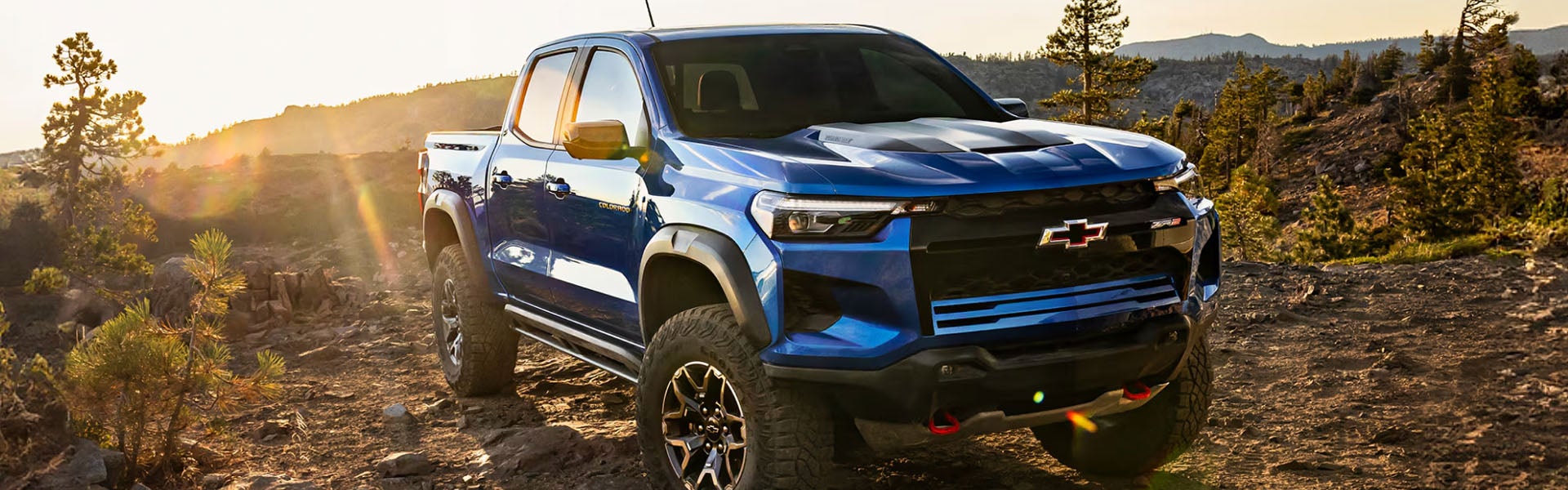
Chevrolet Colorado ZR2 on a rugged mountain trail.

What Is a Chevy Trail Boss? Trail Boss vs. Z71 Explained

Just because you live in the city doesn’t mean you’ve given up your wild side. If you've been thinking about an off-road-ready Chevy truck, you should know about the Chevy Trail Boss and Z71 trims. Both the Trail Boss and Z71 amp up Chevy trucks like the Silverado with brawny, durable enhancements and trailblazing features. While the Trail Boss and Z71 share some DNA, they serve slightly different purposes. For Detroit, Michigan drivers who want to embrace their ruggedness, we’ll map out their differences. What Is a Chevy Trail Boss? The Trail Boss is an off-road-focused package available on select Chevrolet trucks like the midsize Colorado, and most notably the Silverado 1500. It's built around a factory-lifted suspension of 2”, which gives it more ground clearance than a standard truck right off the lot. That lifted stance is paired with skid plates for underbody protection, a locking rear differential, and mud-terrain or all-terrain tires of up to 35 inches. What makes the Trail Boss stand out visually is its aggressive stance and bold exterior styling, including unique badging and wheel designs. If you want a truck that looks ready for the trail before you even leave the lot, the Trail Boss delivers that impression immediately. What Is the Z71? The Z71 is Chevrolet's long-standing off-road package and has been around for decades. The Trail Boss can be equipped with the Z71 Off-Road Package, while there is also a dedicated Z71 trim. It features specific shock tuning, skid plates, and all-terrain tires, but unlike the Trail Boss, the Z71 doesn’t include a factory suspension lift, so it sits closer to stock ride height. It’s geared for on-road use in addition to off-road capability. The Z71 package is available across multiple Chevrolet trucks and SUVs, making it a versatile option for buyers who want added capability without the more dramatic lifted look of the Trail Boss. It's a well-rounded package for drivers who want improved off-road performance while still maintaining a more traditional truck appearance. Trail Boss vs. Z71: Key Differences So what is a Chevy Trail Boss doing differently than a Z71? The most notable distinction is the suspension lift. The Trail Boss includes that 2-inch factory lift, which raises the ride height and improves approach and departure angles on uneven terrain. The Z71 does not include this lift. Additionally, the Trail Boss features a unique Goodyear Wrangler DuraTrac® tire specifically designed for off-road use. The Z71 uses all-terrain tires as well, but the Trail Boss setup is tuned more aggressively for rugged conditions. Both packages include skid plates, but the Trail Boss tends to offer a more complete off-road-ready setup overall. Is a Trail Boss Good for Michigan Winters? Many drivers in Detroit, MI, wonder whether a Trail Boss is practical for everyday use, especially when the weather turns. The short answer is yes. The combination of increased ground clearance, all-terrain tires, and the available 4WC system makes it well-suited for snow-covered roads and slippery conditions. The locking rear differential can also help when traction becomes an issue. The Z71 also performs well in winter conditions, and both packages are strong choices for Michigan's challenging seasonal weather. It really comes down to whether you want the additional lift and more aggressive tire package that the Trail Boss brings. Which Truck Is Right for You? If you prioritize an aggressive off-road stance, maximum ground clearance, and a complete factory-lifted package, the Trail Boss is worth a close look. If you want a more modest upgrade from a standard truck with proven off-road chops and broader availability across the lineup, the Z71 makes a strong case. Both options deliver real capability, and the right choice depends on how you plan to use your truck day to day. Visit Jefferson Chevrolet to Find Your Perfect Truck Now that you have a better answer to "What is a Chevy Trail Boss?" and how it compares to the Z71, the next step is getting behind the wheel. Jefferson Chevrolet is here to help drivers throughout Detroit, MI, find the right truck for their lifestyle and budget. Visit us to explore available inventory and connect with our team today.

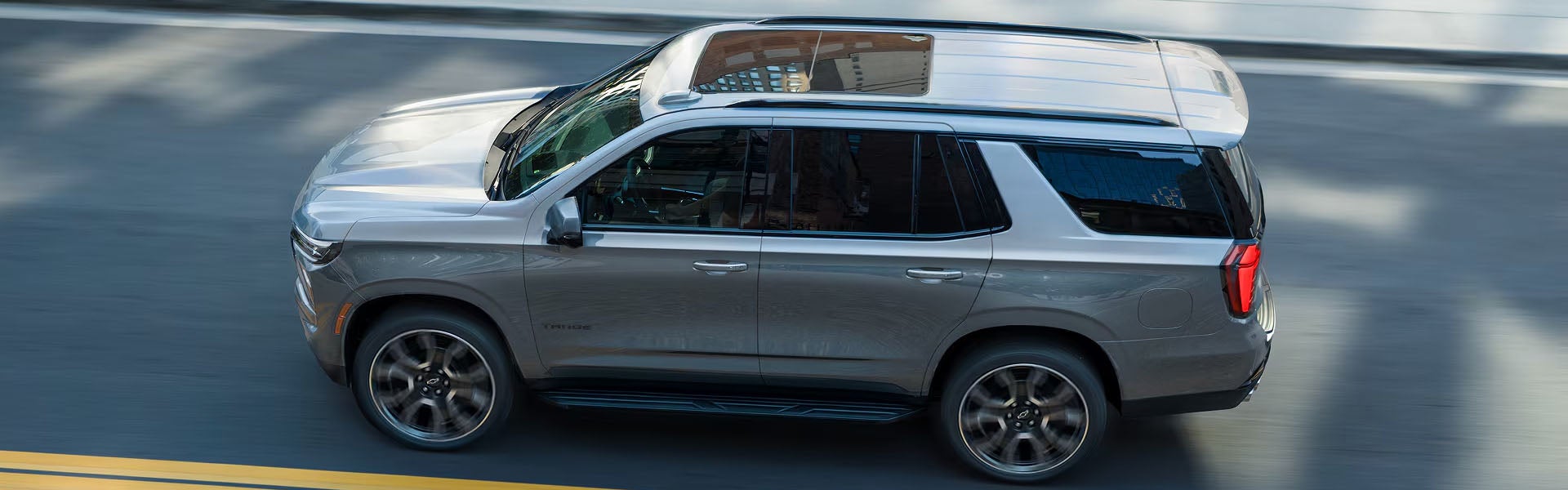
Chevrolet Tahoe driving on a city road.

Chevy SUV Towing Guide: Equinox vs. Traverse vs. Tahoe vs. Suburban

Good vehicle design begins with understanding its intended function. A compact SUV must balance interior space against exterior dimensions, while a full-size SUV has considerably more room for structural strength, passenger accommodations, and towing equipment. Chevrolet's Equinox, Traverse, Tahoe, and Suburban illustrate these different approaches. For Detroit, MI, drivers, their towing capacities reveal how engineering and vehicle proportions influence capability. Chevrolet Equinox: Compact Proportions, Light Towing The 2027 Chevrolet Equinox demonstrates the advantages of compact packaging. Its 1.5L turbocharged 4-cylinder engine produces 175 hp, while available AWD adds traction without compromising its manageable exterior dimensions. Seating for 5 fits within a cabin designed around passenger comfort and efficient use of space. With a maximum towing capacity of 1,500 lbs. when properly equipped, the Equinox accommodates lightweight utility trailers and smaller recreational loads. Its appeal lies in combining everyday maneuverability with occasional towing capability. Chevrolet Traverse: Space Without Excessive Size The 2027 Traverse occupies an interesting position between compact crossover proportions and full-size SUV capability. Its three-row interior accommodates up to 8 passengers, while carefully arranged cabin dimensions provide up to 98 cubic feet of cargo capacity. A 2.5L turbocharged engine produces 328 hp and 326 lbs. ft. of torque through an 8-speed automatic transmission, with standard FWD and available AWD. Properly equipped models tow up to 5,000 lbs. Standard Hitch View, Hitch Guidance, and an integrated Trailering App complement the vehicle's substantial increase in capability. Chevrolet Tahoe: Engineering for Greater Loads The 2027 Tahoe introduces body-on-frame construction, fundamentally changing its approach to towing. Its available powertrains include a 5.3L V8 producing 355 hp and 383 lbs. ft. of torque, a 6.2L V8 generating 420 hp and 460 lbs. ft. of torque, and a 3.0L Duramax Turbo-Diesel delivering 305 hp and 495 lbs. ft. of torque. Properly equipped 2WD models with the 5.3L V8 and Max Trailering Package can tow up to 8,400 lbs. Three-row seating maintains passenger flexibility, while available camera systems and Super Cruise® with compatible trailer support introduce additional technological sophistication. Chevrolet Suburban: Length Creates Opportunity The Suburban takes the Tahoe's fundamental architecture and extends its proportions to prioritize interior volume. The 2026 model provides up to 144.5 cubic feet of cargo space with the rear seats folded, an advantage when transporting substantial luggage and equipment alongside passengers. Sharing the Tahoe's available engine lineup, the Suburban achieves a maximum towing capacity of 8,200 lbs. with the 5.3L V8, 2WD, and Max Trailering Package. Its slightly lower maximum rating illustrates an important design compromise: additional interior capacity doesn't necessarily produce greater towing strength. Understanding the Engineering Behind Towing Ratings Maximum towing figures apply to specific configurations, not every version of a vehicle. Engine selection, drivetrain, trailering equipment, and passenger loads all influence capacity. Trailer tongue weight contributes to the SUV's payload, making Gross Vehicle Weight Rating and Gross Combined Weight Rating equally important considerations. Appropriate hitch equipment, trailer brakes, and weight distribution must also match the vehicle's requirements. Consult the owner's manual before towing. Explore Chevrolet SUV Capability at Jefferson Chevrolet Each Chevrolet SUV approaches towing from a different design perspective, balancing exterior dimensions, interior packaging, and mechanical capability. Visit Jefferson Chevrolet in Detroit, MI, to compare available new inventory and trailering equipment. Schedule a test drive to find the Chevrolet SUV that best accommodates your passengers, cargo, and towing requirements.

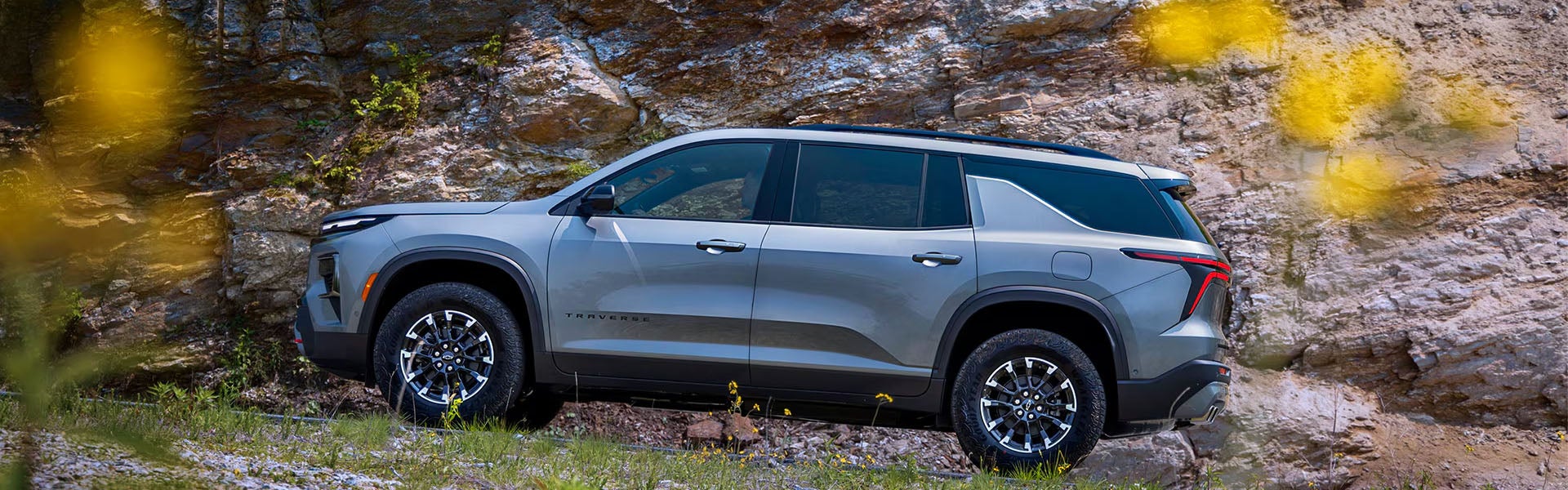
Chevrolet Traverse parked by a rocky trail.

Is AWD or 4WD Better in Michigan Snow?

Michigan winters have a remarkable ability to turn an ordinary drive into an unexpected traction experiment. One minute you're cruising through Detroit, the next you're negotiating a snow-covered intersection with considerably less grip than you'd prefer. Both all-wheel drive (AWD) and four-wheel drive (4WD) can help, but they come at the problem differently. Choosing between AWD vs. 4WD for Michigan snow comes down to road conditions, driving habits, and the capability you need. AWD vs. 4WD: What's the Mechanical Difference? AWD systems generally distribute engine power automatically, adjusting torque between axles as traction changes. Some operate continuously, while others engage additional wheels when needed. Traditional 4WD systems typically use a transfer case and selectable operating modes. Equipped Chevrolet trucks may offer 2HI for normal driving, 4HI for appropriate slippery surfaces, and 4LO for demanding low-speed conditions. Some also feature an automatic 4WD setting. The distinction is straightforward: AWD handles traction adjustments with minimal driver involvement, while traditional 4WD provides greater control over drivetrain operation. Why AWD Makes Sense Around Detroit For commuters navigating plowed highways, slushy intersections, and residential streets, AWD offers a reassuring advantage. Available on the Chevrolet Equinox and Traverse, these systems respond to changing traction without requiring drivers to constantly select different drivetrain settings. Both SUVs also provide comfortable passenger accommodations and flexible cargo space. AWD can make pulling away from a snowy intersection considerably easier, although it won't perform miracles when the road becomes a sheet of ice. Four powered wheels still depend on four tires finding grip. When Michigan Snow Calls for 4WD Deep snow and unplowed roads present a different challenge. Chevrolet models including the Colorado, Silverado 1500, Silverado HD, Tahoe, and Suburban offer available 4WD systems suited to more demanding conditions. Engaging 4HI on appropriate slippery surfaces can improve traction, while available 4LO provides additional torque multiplication for difficult low-speed driving. It's particularly valuable when negotiating deep snow or challenging terrain. However, 4LO isn't designed for highway speeds, and locked 4WD settings can stress drivetrain components on dry pavement. Follow the vehicle's operating instructions when selecting modes. Four-Wheel Traction Doesn't Mean Four-Wheel Braking Magic Here's the important bit: AWD and 4WD help vehicles accelerate, but neither automatically improves braking grip. Stopping and cornering still depend heavily on tires and available road traction. Dedicated winter tires feature specialized rubber compounds and tread patterns designed for cold temperatures, snow, and ice. They're an important consideration regardless of drivetrain. Electronic stability control and anti-lock brakes provide additional assistance, but drivers still need reduced speeds, longer following distances, and smoother steering inputs when conditions deteriorate. Finding the Right Chevrolet for Winter The Equinox and Traverse suit families and commuters seeking available AWD, comfortable interiors, and cargo flexibility. Drivers needing pickup capability can explore available 4WD configurations of the Colorado and Silverado 1500. The Tahoe and Suburban offer three-row accommodations alongside available 4WD and substantial towing capability. Ground clearance, tire selection, and drivetrain equipment deserve attention when comparing vehicles for Michigan winters. Get Winter-Ready at Jefferson Chevrolet The right drivetrain depends on the roads you encounter most frequently. Visit Jefferson Chevrolet in Detroit, MI, to compare available AWD and 4WD Chevrolet models and explore their winter-driving features. Schedule a test drive to discover which configuration best suits your Michigan driving needs.