




Blog / Detroit Chevrolet Dealer

CarBravo Certified Vehicles vs. Traditional Used Cars: Which Is Better for Detroit Drivers?

Close-up of parked cars lined up in a dealership lot.

When shopping for a used vehicle, you quickly notice that not all pre-owned cars are equal. CarBravo certified vehicles offer a structured, quality-focused way to buy used. You might wonder how they compare to traditional used car purchases. For drivers visiting Jefferson Chevrolet in Detroit, MI, understanding this difference ensures a smarter buying decision. We encourage you to reach out to our team to learn more about the advantages of choosing a certified model. 

What Are CarBravo Certified Vehicles? 

CarBravo is General Motors' used vehicle program featuring quality pre-owned cars, trucks, and SUVs from major brands. Certified vehicles pass a rigorous inspection process before reaching the lot, meeting specific age, mileage, and condition standards. Earning CarBravo certification includes a limited warranty and roadside assistance, granting buyers added peace of mind. You typically will not find this transparency with a standard used car purchase from a private seller or a general lot. 

What Makes Traditional Used Cars Different? 

A traditional used car purchase varies greatly. Sellers often offer vehicles as-is with no inspection history or warranty coverage. While some dealerships perform basic checks, the standards and documentation remain inconsistent. Lacking a standardized inspection process forces buyers to assume more uncertainty. Hidden mechanical issues, incomplete service records, or zero protection can arise shortly after purchase. This unpredictability creates valid concerns for shoppers researching used vehicles. 

Comparing the Key Benefits Side by Side 

The primary advantage of a CarBravo certified vehicle is consistency. The program requires each vehicle to pass a detailed multi-point inspection, guaranteeing quality. The package includes comprehensive documentation, vehicle history, and clear warranty terms. Traditional used vehicles frequently cost less upfront, but those initial savings vanish rapidly when unexpected repairs occur. Weighing the total cost of ownership reveals that certification protections make strong practical and financial sense. 

Which Option Is Right for You? 

The ideal choice depends on your budget, priorities, and risk tolerance. A traditional used vehicle suits buyers seeking a lower initial cost who accept some unknowns. However, buyers valuing confidence prefer CarBravo certified vehicles for their inspection history, warranty protection, and roadside assistance. Chevrolet produces a wide range of CarBravo-eligible models, including capable trucks like the Silverado and versatile SUVs like the Equinox and Traverse. A certified option exists to fit any lifestyle. 

Visit Jefferson Chevrolet to Explore CarBravo Certified Vehicles 

The team at Jefferson Chevrolet is ready to help you navigate your options. Our dealership maintains a strong inventory of CarBravo certified vehicles, all thoroughly inspected and backed by robust warranty coverage. A certified vehicle provides a documented history and a defined inspection standard that a typical used car simply cannot offer. For shoppers in Detroit, MI, wanting peace of mind, CarBravo provides an excellent path forward. Visit Jefferson Chevrolet today or browse our inventory online to find the perfect pre-owned vehicle for your needs.

Posted in:

Related Posts

Row of vehicles parked at a dealership lot.

Why You Should Consider Certified Pre-Owned Cars in Detroit

If you're shopping for your next vehicle in Detroit, MI, you should be sure to put certified pre-owned cars on your list. They offer a smart middle ground between buying new and buying used - giving you a quality vehicle with added protections that a standard used car simply can't match. What Makes a Vehicle Certified Pre-Owned? Not every used car earns the certified pre-owned label. Chevrolet’s CPO program is administered by CarBravo, the General Motors certified used program. With the CarBravo program, CPO cars go through a rigorous inspection process before they're approved for sale. All Chevy CPO vehicles must pass a thorough multi-point inspection conducted by trained technicians. The vehicle must also meet strict mileage and age requirements. If it doesn't pass, it doesn't earn the certified badge. This process is designed to give buyers confidence that the vehicle they're purchasing has been carefully evaluated and meets specific quality standards. What You Get With Chevy CPO Vehicles Certified pre-owned Chevrolets from the CarBravo program come with several benefits that set them apart from a typical used vehicle purchase. Chevy CPO vehicles include a limited warranty, which can provide coverage on major systems and components. Certified used cars also often come with roadside assistance and other ownership perks. These added layers of support make the ownership experience more enjoyable and a lot less stressful. Savings Without Sacrificing Quality One of the biggest reasons drivers in Detroit, MI turn to CPO cars is the opportunity to save money without giving up coverage. Certified pre-owned vehicles are priced lower than new ones, which means you may be able to get into a higher trim level or a vehicle with more features than your budget would allow if you were shopping new. Chevy CPO vehicles also hold their value well, which can be an advantage when it's time to trade in or sell. You're not just saving at the point of purchase - you're making a smarter long-term financial choice. A Wide Range of Models to Choose From Whether you need a versatile truck, a family-friendly SUV, or an efficient everyday car, CarBravo certified used cars in the Chevrolet lineup cover a lot of ground. From the Silverado to the Equinox and the Trax, there are plenty of certified pre-owned cars to explore depending on your lifestyle and priorities. Having options is important, and shopping CPO means you can find the right fit without feeling locked into a single choice. Visit Jefferson Chevrolet for Certified Pre-Owned Cars If you're ready to explore certified pre-owned cars in Detroit, MI, Jefferson Chevrolet is a great place to start. The team can walk you through the available inventory, explain warranty details, and help you find a Chevy CPO vehicle that checks all your boxes. Stop in or schedule a test drive online to get started.

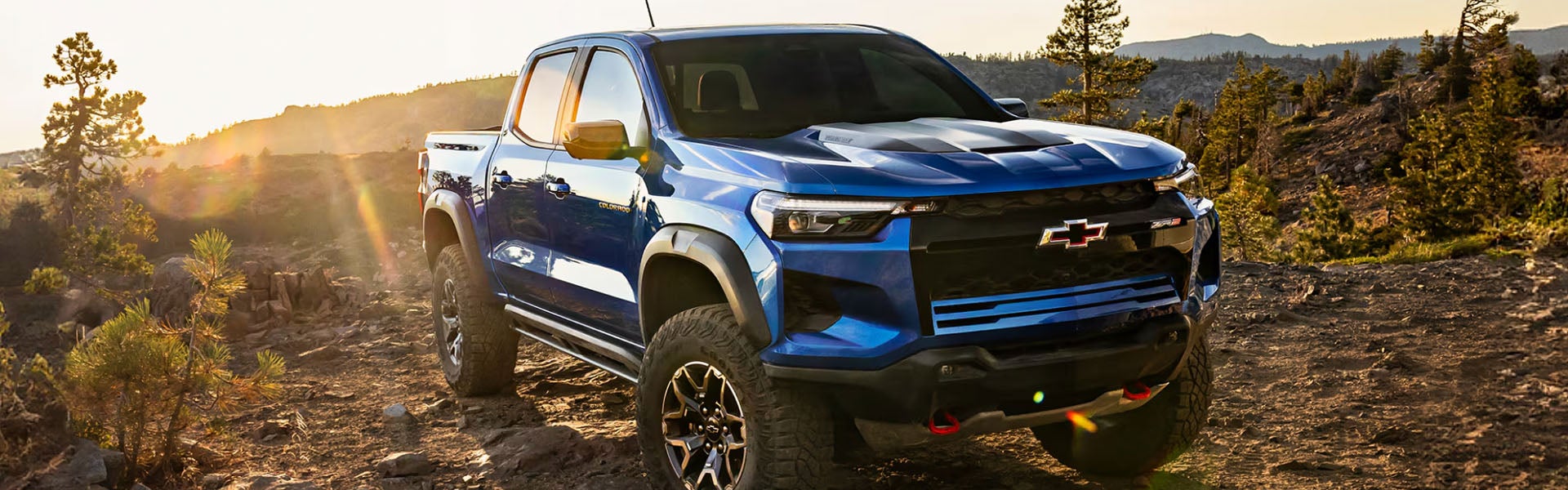
Blue Chevrolet Colorado ZR2 pickup on an off-road trail.

Chevy Colorado vs Silverado: Which Truck Is Right for You?

If you're in Detroit, MI trying to decide between the Chevy Colorado vs Silverado, you're already looking at two of the strongest trucks in the Chevrolet lineup. Both are built to work hard and ride comfortably, but they are built for different purposes. Knowing what sets them apart can make your next truck decision a whole lot easier. Size and Everyday Usability The Colorado is a midsize truck, which makes it a good fit for drivers who want capability without the bulk of a full-size pickup. It's easier to maneuver in tighter spaces, fits in standard parking spots, and still offers a capable payload and towing setup for everyday hauling needs. The Silverado is a full-size truck built for drivers who need more of everything, more cab space, more towing muscle, and more options across a wide range of trims. For anyone who regularly hauls heavy loads or needs maximum interior room, the Silverado delivers on both fronts. Towing and Capability When it comes to capability, the Silverado has an edge over the Colorado. The full-size Silverado is engineered to handle serious towing and payload demands that go well beyond what a midsize truck can offer. The 2026 Chevrolet Silverado 1500 offers several powertrains. The TurboMax™, standard on most trims, produces 310 hp and a best-in-class 430 lb-ft of torque. The 5.3L EcoTec®3 V8, standard on LTZ and High Country (available on other trims), puts out 355 hp and 383 lb-ft of torque. An available 6.2L EcoTec®3 V8 has 420 hp and 460 lb-ft of torque. The available Duramax® 3.0L turbo-diesel has 305 hp, 495 lb-ft of torque, and an available towing capacity of up to 13,300 lbs. It also has a best-in-class gas milage of 28 MPG highway. However, the Colorado is no lightweight. It handles trailering and light commercial tasks with ease, making it a smart pick for weekend adventurers and small business owners alike. The 2026 Chevrolet Colorado comes standard with a 2.7L TurboMax 4-cylinder producing 310 hp and 430 lb-ft of torque, paired with an 8-speed automatic transmission. It offers strong acceleration and towing capability, with up to 7,700 lbs of maximum towing capacity. Trim Levels and Customization Both trucks offer a wide range of trim options, so if you're a work-focused buyer or looking for comfort, there's a truck for you. The Silverado's trim lineup extends higher, with more available luxury and technology features at the top end. The Colorado offers its own solid range of configurations, including off-road-focused options for drivers who want to get off the beaten path. Technology and Interior Features Both the Colorado and Silverado come equipped with modern technology, including available touchscreen infotainment systems, wireless connectivity, and driver assistance features. The Silverado tends to offer more tech upgrades at higher trims, given its broader price range and larger cabin. The Colorado still holds its own with a comfortable, well-organized interior. Depending on your daily priorities in this Colorado vs Silverado decision, either truck can deliver a tech-forward experience that keeps you connected on and off the road. Which Truck Is Right for You? If you need maximum towing capacity, a spacious cabin, and top-tier options, the Silverado is hard to beat. If you prefer a more manageable size with genuine off-road potential and strong everyday capability, the Colorado is an excellent choice. Ultimately, the Chevy Colorado vs Silverado decision comes down to how and where you plan to use your truck. Both models are available at Jefferson Chevrolet, and the team there can help you find the right fit. Visit us online to explore inventory and take the next step toward your perfect Chevy truck.

Mechanic performing a tire rotation on a vehicle.

Tire Replacement Michigan: What Every Detroit Driver Should Know

Knowing when to schedule a tire replacement in Michigan can make a real difference in how safely your Chevy handles the road. Between harsh winters, spring potholes, and summer heat, Michigan roads put serious stress on your tires throughout the year. If you're not sure where to start, this guide breaks it all down for you. When Should You Replace Your Tires in Michigan? When should you replace your tires in Michigan? The short answer is: sooner than you might think. Michigan's freeze-thaw cycles are especially tough on rubber, causing tires to crack, harden, and lose grip faster than in milder climates. A simple way to check your tires is the penny test. Insert a penny into the tread groove with Lincoln's head pointing down. If you can see the top of his head, your tread depth is too low and it's time for a replacement. Most experts recommend replacing tires when tread depth falls below 2/32 of an inch, though 4/32 of an inch is a safer threshold for wet or snowy Michigan roads. Signs Your Chevrolet Needs New Tires Tire replacement isn't just about tread depth. There are other warning signs that your Chevy's tires need attention sooner rather than later. Visible sidewall bulges or cracks are a serious safety concern, as they can lead to a blowout with little warning. Uneven wear patterns often point to alignment or suspension issues that, if left unaddressed, will continue to wear down new tires prematurely. Persistent vibration while driving - especially at highway speeds - can also signal that a tire has structural damage. If your Chevy is pulling to one side or your tires are losing air more frequently than normal, bring it in for an inspection before the issue gets worse. How Michigan Seasons Affect Tire Wear Each season brings its own challenges. Winter conditions demand tires with flexible rubber compounds that grip in snow and ice. Summer temperatures cause tire pressure to fluctuate, which affects handling and can lead to premature wear if left unchecked. Spring is particularly hard on tires near Detroit, MI, where frost heaves create rough pavement and pothole-filled roads. These impacts can damage tires and wheels in ways that aren't always obvious from the outside. Checking your tires every time the season changes is a smart habit for any Michigan driver. How Often Should You Replace Tires? Even if your tires look fine, age is important. Most tire manufacturers recommend replacing tires every six years, regardless of visible wear. After 10 years, tires should always be replaced, even if the tread appears adequate. Tire replacement in Michigan also depends on your driving habits. High-mileage drivers who commute frequently may need new tires every three to four years. If you're unsure of your tires' age, the manufacture date is stamped on the sidewall as a four-digit code representing the week and year of production. Visit Jefferson Chevrolet for Tire Service So, if you need a quick inspection or a full tire replacement, the Certified Service team at Jefferson Chevrolet is here to help. They're trained specifically on Chevrolet vehicles and use quality parts designed to meet your Chevy's specifications. Drivers throughout Detroit, MI trust Jefferson Chevrolet to keep their vehicles road-ready in every season. Stop in, schedule an appointment online, or give us a call - your safety starts with the right tires.